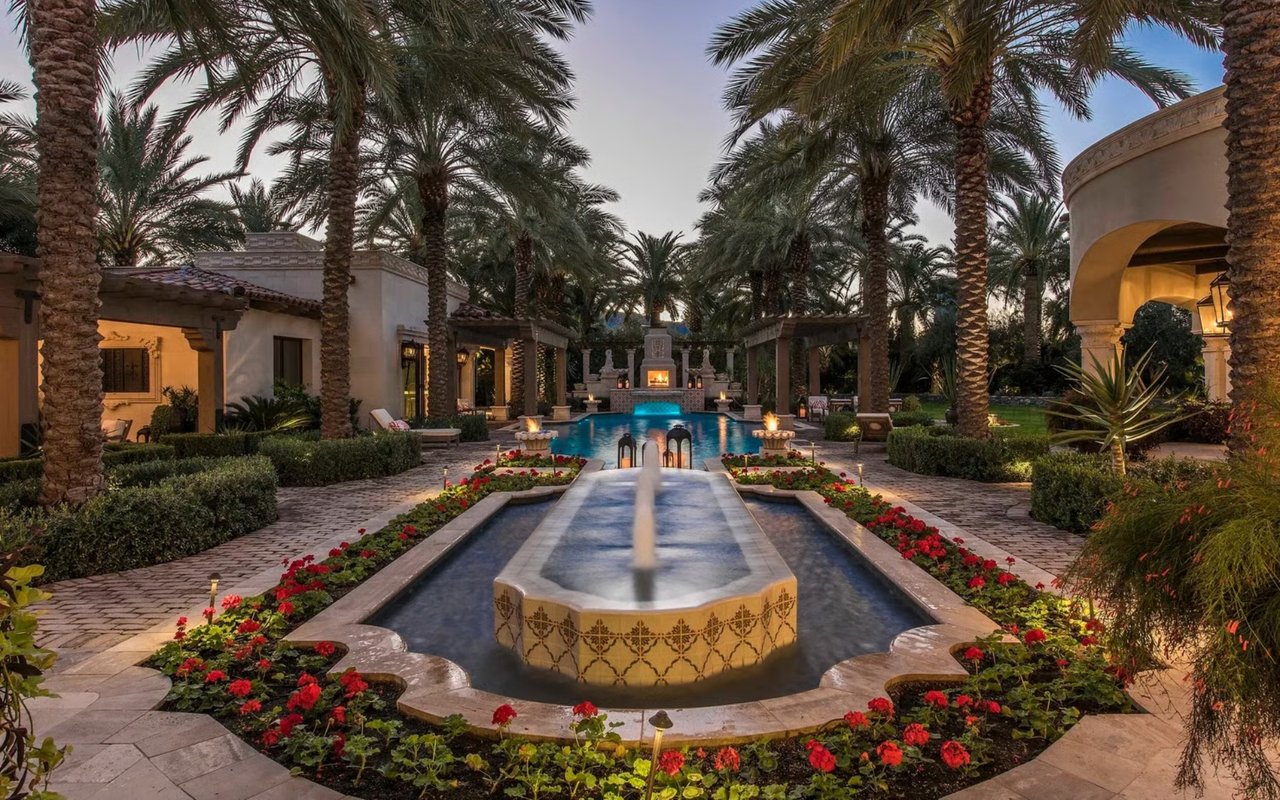
Paradise Valley
Find the newest homes for sale & real estate listings in Paradise Valley!
Paradise Valley, Arizona (zip codes 85253 and 85255) is a 16-square-mile incorporated town in Maricopa County bordered by Scottsdale to the north and east, Phoenix to the west, and Tempe to the south. Median list prices range from $4.7M to $5.9M in 2026, with turnkey estate entry at $5M+. The town enforces 100% residential zoning with 1-to-5 acre minimum lot sizes and zero commercial development — making it the most supply-constrained luxury residential market in Arizona. Population: approximately 14,000 residents.
Researching Paradise Valley estates? Most significant transactions here never reach public MLS.
Arizona's most exclusive residential enclave: 100% residential zoning, $5M+ entry point for turnkey estates, and a trophy asset market driven by California and Texas equity migration in 2026.
Enclave | Character | Price Tier (2026) | Buyer Profile |
|---|---|---|---|
Mummy Mountain Estates | Hillside multi-acre estates, Sonoran mountain silhouettes, city light views | $8M to $25M+[1] | Ultra-HNW, legacy asset buyers, predominantly cash |
Clearwater Hills | Guard-gated, Phoenix Mountains Preserve slopes, 2+ acre parcels standard | $5M to $15M | Privacy-focused, California equity migrants |
Camelback Country Club Estates | Flat multi-acre parcels, golf lifestyle, compound-scale configurations | $4M to $10M | Golf-lifestyle buyers, corporate relocators |
Hillside Custom Build Sites | Desert Contemporary new construction, teardown-to-custom pipeline | Land $2M to $5M + construction cost | Architect-driven buyers, Desert Modernism specialists |
Valley Floor Estates | Flat multi-acre parcels, pool compounds, guest house configurations | $3.5M to $8M | Wellness-focused buyers, compound lifestyle |
[1] Price tiers reflect 2026 active and recent closed transaction data in Paradise Valley, AZ (85253/85255). Market conditions subject to change. Consult a licensed advisor for current valuations. Andrew Bloom and Austin Bloom hold AZ license SA110379000 and SA675314000 respectively.
Paradise Valley is a global showcase for Desert Modernism, the architectural language defining the intersection of natural Sonoran materiality and precision-engineered luxury. While Mediterranean villas remain part of the existing inventory, the 2026 buyer is driving demand toward glass-walled sanctuaries that dissolve the boundary between interior living and the raw desert landscape. Rammed earth walls, cantilevered steel frames, negative-edge pools aligned to mountain sightlines, and indoor-outdoor living systems that function year-round are the defining features of top-tier 2026 acquisitions.
Custom contemporary builds on hillside teardown sites represent the most active sector of the current high-end market. Buyers acquire the land, engage an architect, and produce a generational asset that cannot be replicated on the open market. BVO Arizona advisors specialize in identifying these sites and navigating the custom build advisory process from land acquisition through completion. For buyers interested in new development, visit the BVO Development Group.
The defining technology layer in Paradise Valley's top-tier estates in 2026 is Invisible Sustainability: smart home systems fully integrated into the architecture with no visible hardware, panels, or external equipment. Circadian Lighting systems that modulate color temperature and intensity across a 24-hour cycle are now a standard specification in properties above $8M. Acoustic Zoning, which engineers silence in primary bedroom wings and wellness spaces, is emerging as a primary request among buyers relocating from coastal urban markets. For buyers seeking these specifications in a development context, visit the BVO Development Group.
Clearwater Hills — Guard-gated along the slopes of the Phoenix Mountains Preserve. Properties here command city light and mountain views simultaneously, with most parcels sized at 2 acres or above. Privacy infrastructure including perimeter walls, automated gates, and setback distances is a default feature of this enclave.
Mummy Mountain Estates — Arizona's definitive hillside address. Multi-acre parcels on the mountain's flanks produce the most photographed residential silhouettes in the state. Properties here are acquired and held generationally; public listings are rare and most transactions move through private networks before any MLS entry is considered.
Camelback Country Club Estates — Flat, expansive acreage adjacent to the Camelback golf corridor. Parcel sizes accommodate compound-scale configurations including a primary residence, guest house, wellness wing, and motor court without elevation constraints. For active listings in the adjacent Scottsdale luxury market, BVO covers both corridors.
Life in Paradise Valley is defined by quiet luxury. With no commercial high-rises, no large-scale retail corridors, and no mixed-use development permitted by town zoning, residents live in a residential sanctuary with no commercial intrusion. The community is anchored by world-class wellness at The Sanctuary on Camelback Mountain, one of the most recognized destination spa resorts in the American Southwest, and by elite private education at Phoenix Country Day School[2], one of Arizona's most selective independent schools.
For buyers relocating from California, the comparison point is Bel Air or Malibu: equivalent privacy, equivalent architectural ambition, and equivalent community character at a materially lower acquisition cost and with a 10.8 percentage point annual income tax advantage (AZ 2.5% vs CA 13.3%). BVO advises this transition from both sides. See the BVO California team for the exit strategy and the BVO Arizona team for destination-side acquisition.
Off-Market Access. The majority of significant Paradise Valley estate transactions in 2026 are structured before MLS entry. BVO maintains private network access to Mummy Mountain and Clearwater Hills inventory that does not appear on public platforms. Request a confidential acquisition consultation or explore current Arizona listings.
Paradise Valley median list prices range from $4.7M to $5.9M in 2026, with turnkey estate entry at $5M+. The ultra-luxury tier at $10M and above remains supply-constrained and is driven predominantly by cash transactions from California and Texas equity migrants. Hillside and Mummy Mountain corridor properties regularly trade between $8M and $25M+. See active Arizona listings for current inventory.
Paradise Valley's pricing reflects structural scarcity. As a 100% residential town with strict 1-to-5 acre minimum lot zoning and no commercial development permitted, land supply is permanently capped. Combined with sustained HNW demand from California and Texas equity migration, the result is a market with structural immunity to inventory volatility affecting adjacent Scottsdale submarkets. Properties here transact as legacy assets, not commodity real estate.
The primary enclaves are Mummy Mountain Estates for hillside legacy properties and Arizona's highest price tier, Clearwater Hills for guard-gated privacy on the Phoenix Mountain slopes, and Camelback Country Club Estates for flat multi-acre parcels suited to compound-scale configurations. Custom build sites on hillside teardown parcels represent the most active sector of the current market for buyers seeking architect-driven Desert Modernism construction.
For California HNW buyers, Paradise Valley is the primary destination market in Arizona. The combination of equivalent privacy and architectural quality to Bel Air or Malibu, a 10.8 percentage point annual income tax advantage (AZ 2.5% vs CA 13.3%), lower property taxes, and materially more residential real estate per dollar of California equity makes the financial and lifestyle case compelling. The BVO California team coordinates the dual-state transition simultaneously.
Paradise Valley is an incorporated town in Maricopa County, Arizona. It covers approximately 16 square miles and is bordered by Scottsdale to the north and east, Phoenix to the west, and Tempe to the south. The primary zip codes are 85253 and 85255. The town has a population of approximately 14,000 and maintains no commercial zoning of any kind.
By Andrew Bloom and Austin Bloom, BVO Luxury Group
AZ SA110379000 and SA675314000 | CA DRE# 02243874
Andrew and Austin Bloom lead BVO Luxury Group's Paradise Valley and Scottsdale estate practice, with a transaction record spanning $5M to $25M+ acquisitions across Mummy Mountain, Clearwater Hills, and off-market corridor inventory. BVO advises dual-state buyers navigating California equity exit and Arizona estate acquisition simultaneously.
Whether acquiring a turnkey modern estate, a hillside homesite, or a compound-scale valley floor property, BVO Luxury Group provides the hyper-local expertise and private network access to navigate Paradise Valley's exclusive off-market opportunities.
17,202 people live in Paradise Valley, where the median age is 54 and the average individual income is $135,330. Data provided by the U.S. Census Bureau.
Total Population
Median Age
Population Density
Average individual Income
There's plenty to do around Paradise Valley, including shopping, dining, nightlife, parks, and more. Data provided by Walk Score and Yelp.
Explore popular things to do in the area, including Anderson Peter, Wetzel's Pretzels, and Luxe Boutique.
| Name | Category | Distance | Reviews |
Ratings by
Yelp
|
|---|---|---|---|---|
| Dining | 0.57 miles | 0 reviews | 0/5 stars | |
| Dining | 0.98 miles | 0 reviews | 0/5 stars | |
| Shopping | 0.57 miles | 2 reviews | 3/5 stars | |
| Shopping | 1.98 miles | 0 reviews | 0/5 stars | |
| Shopping | 2.13 miles | 1 review | 1/5 stars | |
| Shopping | 2.14 miles | 0 reviews | 0/5 stars | |
| Active | 1.96 miles | 0 reviews | 0/5 stars | |
| Active | 2.52 miles | 0 reviews | 0/5 stars | |
| Beauty | 0.54 miles | 0 reviews | 0/5 stars | |
| Beauty | 0.98 miles | 0 reviews | 0/5 stars | |
|
|
||||
|
|
||||
|
|
||||
|
|
||||
|
|
||||
|
|
Paradise Valley has 7,365 households, with an average household size of 2.32. Data provided by the U.S. Census Bureau. Here’s what the people living in Paradise Valley do for work — and how long it takes them to get there. Data provided by the U.S. Census Bureau. 17,202 people call Paradise Valley home. The population density is 950 and the largest age group is Data provided by the U.S. Census Bureau.
Total Population
Population Density Population Density This is the number of people per square mile in a neighborhood.
Median Age
Men vs Women
Population by Age Group
0-9 Years
10-17 Years
18-24 Years
25-64 Years
65-74 Years
75+ Years
Education Level
Total Households
Average Household Size
Average individual Income
Households with Children
With Children:
Without Children:
Blue vs White Collar Workers
Blue Collar:
White Collar:
Arizona
9200 East Pima Center Parkway
Scottsdale, AZ, 85258
California
439 N Canon Dr Penthouse
Beverly Hills, CA 90210
DRE# SA110379000 (AZ) | 01428775 (CA)
Arizona
9200 East Pima Center Parkway
Scottsdale, AZ, 85258
California
439 N Canon Dr Penthouse
Beverly Hills, CA 90210
DRE# SA110379000 (AZ) | 01428775 (CA)


